Could Agricultural Intelligence Become India's Next Great Export?
Exploring whether India can export agricultural capability, technology and knowledge rather than simply agricultural commodities.

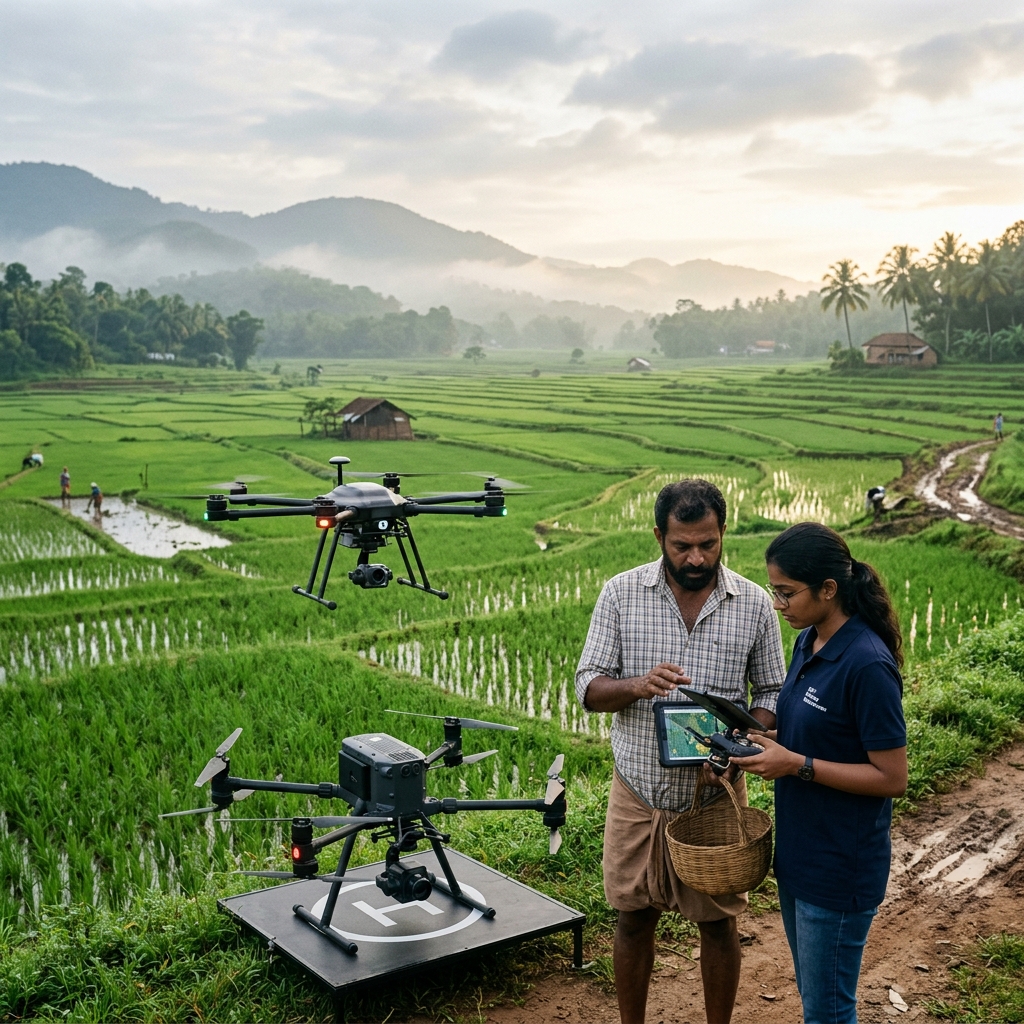
For decades, global economic dialogue centered around India as the world's software engine or business services hub. Yet quietly, a profound shift is unfolding in India's rural ecosystems.
With over 140 million farm holdings, extreme weather variability, diverse agro-climatic zones, and hyper-fragmented supply chains, India represents the world's most complex proving ground for agricultural resilience.
“Commodities suffer from price volatility. Agricultural Intelligence builds geopolitical resilience and long-term economic sovereignty.”
The traditional economic paradigm treats agriculture primarily through the lens of commodity yields: tonnes of wheat, bales of cotton, or crates of mangoes exported to global markets. However, commodity exports are vulnerable to trade barriers, climate volatility, and low value addition.
What if India's primary contribution to global food security isn't just shipping crops, but exporting 'Agricultural Intelligence'—the full stack of predictive crop telemetry, affordable micro-automation, decentralized soil health protocols, and weather-indexed financial risk models?
By standardizing and packaging these AI-driven agritech frameworks for smallholder farmers across Africa, Southeast Asia, and Latin America, India can pioneer a multi-billion dollar export model rooted in technological empowerment.
Related Articles & Essays
Can Ancient Wisdom and AI Build a Better Future?
Exploring what centuries-old systems of human knowledge can contribute to the age of artificial intelligence.
TECHNOLOGY LEADERSHIPEnterprise Architecture Should Be a Business Capability
Why architecture should influence investment decisions, simplification and transformation rather than becoming a documentation function.